

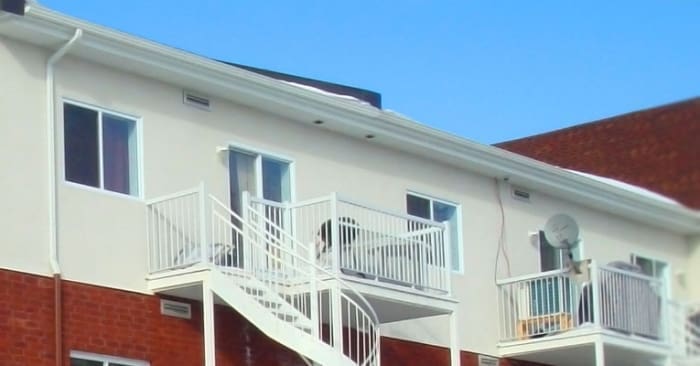
Do you want to preserve the beauty of your fiberglass balcony over the years? Robust and durable, fiberglass balconies are known for withstanding the test of time well.
However, certain precautions are necessary to maintain their beautiful appearance and restore their shine. Here are our experts’ tips to preserve the beauty of your balcony:
1. How to Clean a Fiberglass Balcony?
Although fiberglass balconies are known to be “maintenance-free”, they still require a minimum of attention to optimize their lifespan. For effective and lasting cleaning, you will need to consider the following points:
Seal Cracks on your Balcony.
- It is normal for cracks to appear on your balcony over time, due to wood moisture. If cracks appear, you will need to act quickly to prevent water infiltration, which would cause these cracks to multiply. Therefore, as soon as you notice a crack has formed, it is necessary to seal it immediately.
Clean your Patio with Mild Soap.
- A simple cleaning with water and mild soap or even dish soap will restore your balcony’s beautiful appearance. Be sure not to use aggressive products that could, on the contrary, damage its surface.
Get Rid of Stains on your Balcony.
- If you want a deeper cleaning and to get rid of potential stains, you can also opt for brushing with the brush of your choice, except those with metal bristles. For the most stubborn stains, opt for TSP added to a little water, then scrub to remove the stain.
Strengthen its Finish.
- When your balcony starts to lose its shine over time, you can opt for the use of gelcoat, pigmented to obtain the color of your choice, which will aim to restore its beautiful shine and protect it against external aggressions.
2. How to Protect your Fiberglass Balcony throughout the Year?
- During winter. You can spread salt or sand to melt ice when winter arrives, without damaging your fiberglass balcony. Also note that it is preferable to clear accumulated snow to find your balcony as you left it.
- Pay attention to harmful elements. Although fiberglass is known to be a very resistant material, it has low tolerance to fire and solvents. It is therefore important to ensure that your balcony will not be exposed to these elements.
- Avoid rust marks or other stains. Be careful not to leave objects permanently on your balcony to avoid marks and stains, and move them regularly.
3. How to Paint a Fiberglass Balcony?
Do you want to refresh your fiberglass balcony with a coat of paint? Before starting your work, it is important to consider certain points to obtain a lasting result.
What Paint to Use for your Patio?
It is highly recommended to use acrylic paints for fiberglass balconies. Be careful not to use any paint containing solvent, as you risk detaching the fiberglass. Also know that there are many paints specially designed for fiberglass coatings.
What Type of Finish?
Before starting your work, you will also need to define the type of finish you desire. A smooth finish? Granite? What color? Know that there are many possibilities for finishes and colors. For advice, ask experts.
The Different Steps to Paint your Balcony According to the Rules of the Art:
- Sanding. First, sand your balcony over its entire surface.
- Mixing products. Then, proceed to mix the gelcoat you have chosen with the hardener.
- Cutting. To avoid encroaching on the areas surrounding your balcony, proceed with cutting with a brush to delimit the areas to be painted.
- Filling. Paint the rest of your balcony with a roller. Apply two to three coats depending on its exposure (see notes below)
- Drying. Once the paint is applied, it is necessary to wait at least 8 hours before walking on your balcony or storing objects on it.
Our Experts’ Advice:
- If you want a granite finish, generously sprinkle the granite flakes before the paint dries.
- Use less catalyst to promote slower drying of the paint, which will allow it to adhere better to the fiberglass coating.
- Take into account the location of your balcony (sunny, shady, exposed to humidity, etc.) to determine the number of coats it will need.